
Faith in the Awakened World is woven into every life, from the great ceremonies of nations to the quiet reverence within a single home. The Last Gods, the Mother, Wolf, Maw, and Mountain, shape the year and its seasons, guiding how the awakened live, labor, mourn, and endure. Their rhythms govern the turning of the world, and to the faithful, they are both presence and promise.
In Dothemia, faith took on new depth. As journals became sacred and memory itself was raised to ritual, devotion shifted inward. Belief became not only prayer and offering, but reflection, remembrance, and becoming. Here, faith was less about appeasing the divine and more about honoring the life that persists in spite of their banishment by the Nine.
The Last Gods are honored not through grand idols or statues of gold, but through humble effigies kept wherever candlelight can reach them. Whether set upon a shelf or hearth, these wooden carvings serve as vessels of devotion and reminders of the divine powers that shape the seasons and the lives within them.
Some homes keep all four, others only one, but wherever they rest, these effigies mark a sacred place, where the Awakened place themselves before the divine.
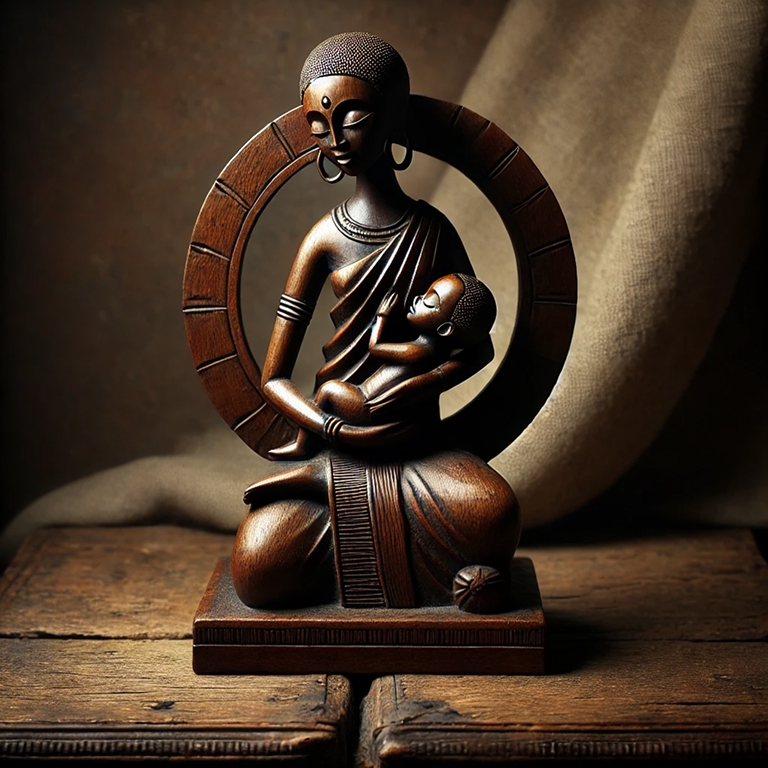
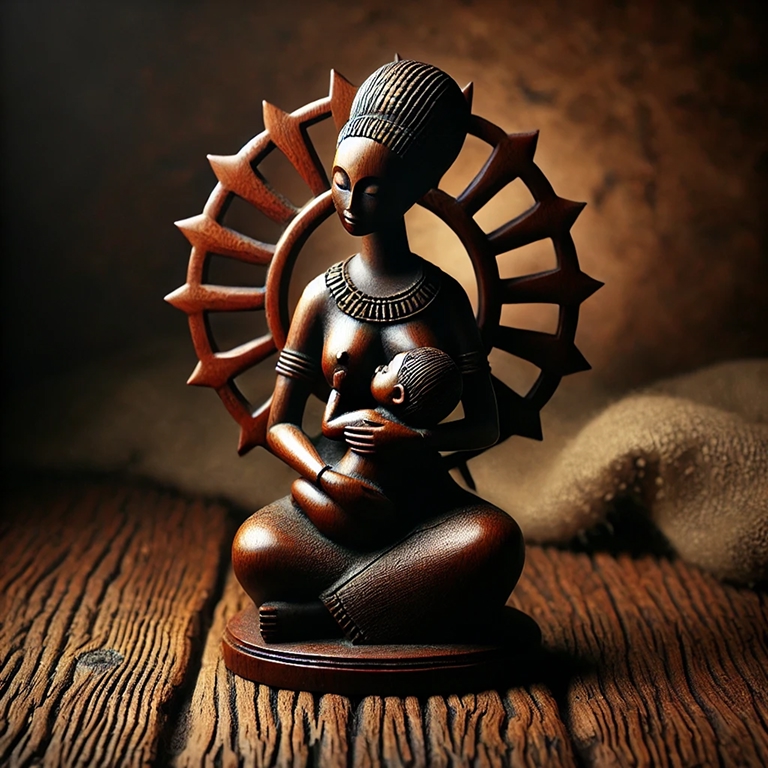

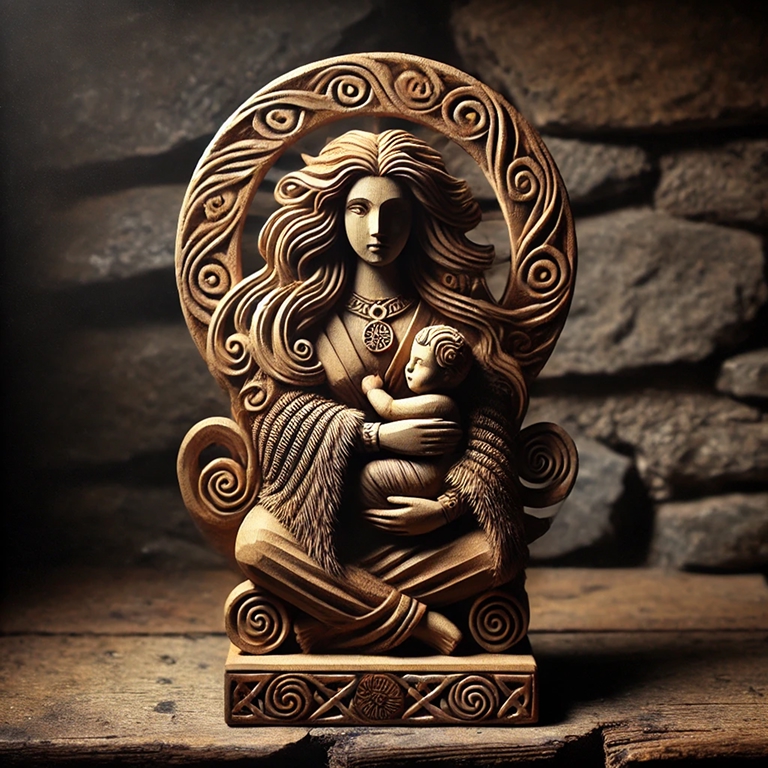

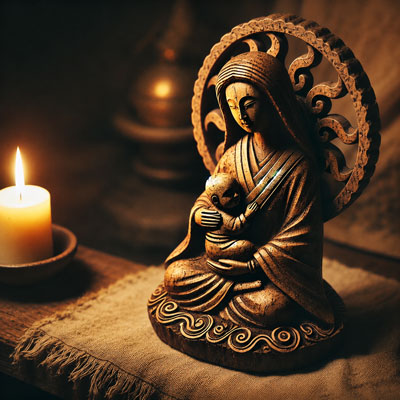


The Mother is the breath of beginnings, the warmth of renewal, and the bittersweet keeper of life and loss. Her effigies are carved to depict a woman, a bearer of life. In one arm, she cradles an infant, and at her feet lies the body of a fallen warrior. Near her, a sword often lies to symbolize guardianship. Behind or near her is the wolfsun, symbol of the year’s first rising, and plants to further symbolize her role as the bringer of life. She is blessing, burden, grief, and grace intertwined.


Wolf effigies depict the beast, forward-facing, alert, and sharp-eyed. Every line and angle speaks of vigilance and survival, the duty of the hunt, the courage of the warrior, and the unbreakable bond of the pack and family. To keep the Wolf upon one’s shrine is to acknowledge the season when strength is demanded, when lines are drawn, and when the howl of warning carries across the land.


Effigies of the Maw are never shaped into faces or bodies. Instead, the faithful carve a wooden bowl and place within it a small mound of sacred ash, gathered from the pyres of the fallen. Ash is the Maw’s truest form, what follows flame, what follows life, and what follows harvest and sacrifice alike. These effigies are kept small and intimate, often displayed alone or set beside the other gods as a quiet reminder that all things must one day be given back.


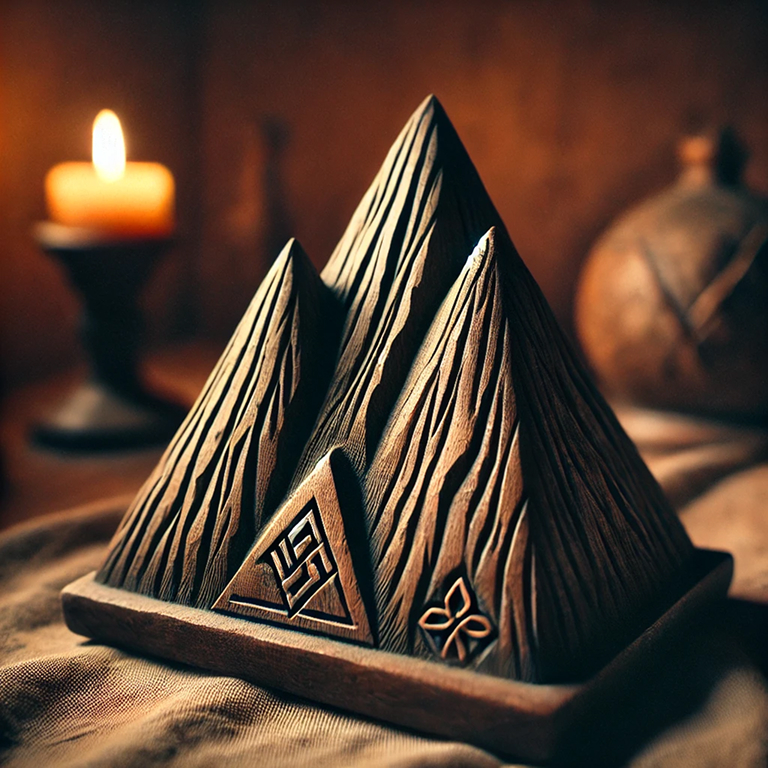
Effigies of the Mountain are often carved atop a broad base, and rise, wide, conical, and flat-bottomed, tapering into peaks. Their carvings are intentionally rough-hewn, the lines stark, the symbols sharply etched into the grain. They embody unity of burden, the strength to endure, the patience to wait, and the clarity to reflect. The Mountain is the stillness of winter, the hard lessons, and the vigil kept through cold and dark.
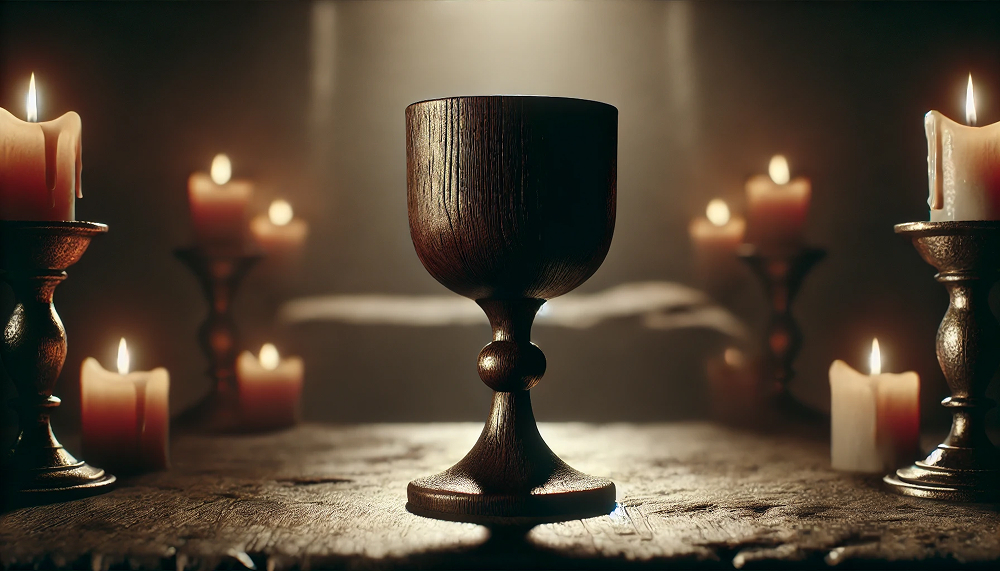
The Creed represents the Hollow through the use of a simple wooden chalice. Each one is small, inornate, and unremarkable, yet to the Creed, the empty chalice carries a meaning deeper than any effigy. It is not made to hold wine, water, ash, or offerings. Its emptiness is its devotion.
To honor the Hollow is to empty oneself of self, family, tribe, nation, history, and memory—and to accept that only the Hollow may enter, leaving only stillness and silence. For this reason, the chalices are carved with deliberate plainness. They are pristine in their lack of ornament, perfect only in what they refuse to be. This is how the Creed and Crusade view themselves.
Chalices bear a single node along the stem, a small raised point of wood left during carving. This is the only ornamentation permitted, and even this is kept spare and understated. The node represents the moment of awakening that follows emptiness, the point at which the self is ready to receive whatever truth the Hollow offers.
The empty chalice is a reminder to those who follow the Creed, that they must remain surrendered, to allow the Hollow to enter so that they may be both filled and defined by its presence.


